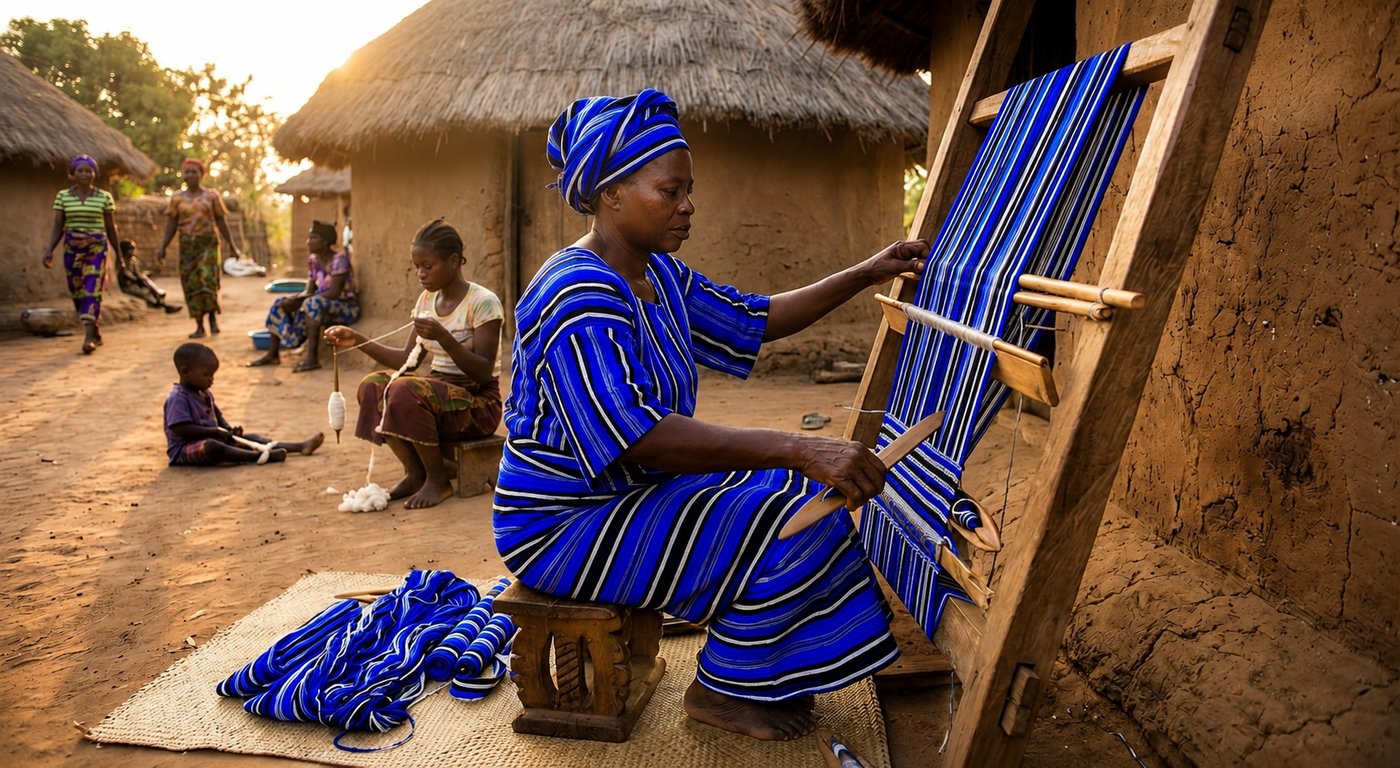
Craft Passed by Hand
The Ogodogodo is woven on a narrow-strip loom — a device the Igede have used for generations. There are no machines. Each cloth is the product of hours of careful, repeated motion. The weaver decides in advance which colours to use and in what sequence, consulting the occasion and the person it is being made for.
A single length of fabric can take several days to complete. The finished strips are then sewn together to create the full garment.
The Six Stages
Selecting the Thread
Cotton or synthetic thread is chosen in the three traditional colours — blue, white, and black. The weaver considers the purpose of the cloth: ceremonial fabrics use higher-quality thread than everyday wear.
Setting Up the Loom
The warp threads are measured and wound onto the loom. This stage determines the width and the colour pattern that will repeat across the full length of the cloth. It requires precision — a mistake here cannot easily be corrected later.
Threading the Heddles
Each warp thread is passed through the heddles — the small loops that control which threads rise and which fall with each pass of the shuttle. This creates the interlocking structure that gives the cloth its strength.
Weaving the Strips
The shuttle carrying the weft thread is passed back and forth through the shed — the gap created by lifting the heddles. The weaver beats each row firmly into place. This rhythmic motion, repeated hundreds of times, produces the tightly interlocked fabric.
Cutting and Finishing
Once the strip is complete, it is cut from the loom and the ends are secured to prevent unravelling. The edges are inspected and any loose threads are trimmed by hand.
Joining the Strips
Multiple strips are sewn together side by side to create the full width of the garment. The seams are aligned carefully so the stripe pattern continues uninterrupted across the joins — a mark of the weaver's skill.